Tips for better woodland photography in autumn
Introduction
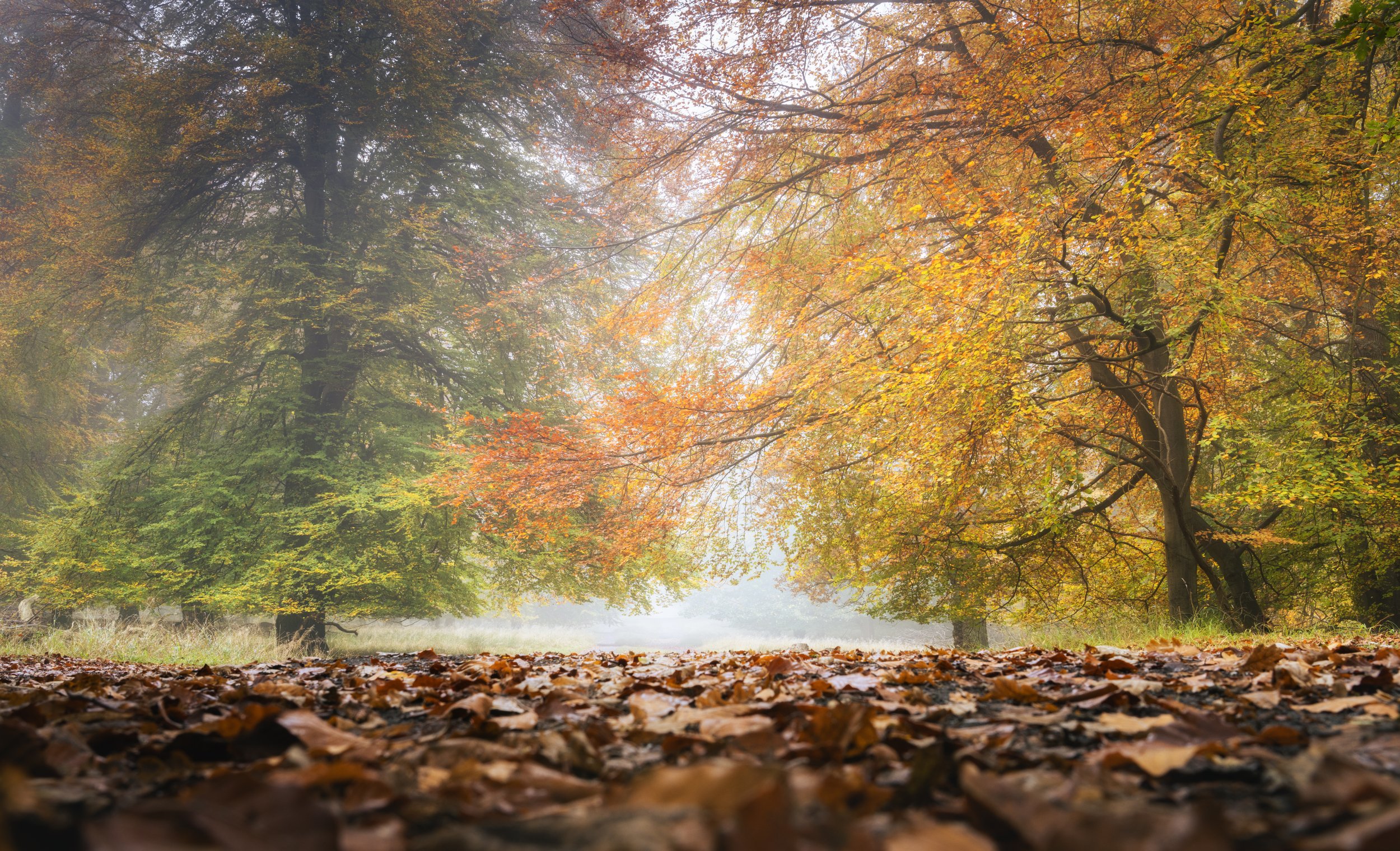
Autumn is slowly starting to show its true colors and so it is our prime time as photographers to go out and capture the beauty of this season.
However, this time of year can be challenging for a variety of reasons. From shifting weather to having a lot of colors and messiness to work with, you can easily end up with images that don’t capture the feeling you had in the moment.
Why forests are the place for autumn photography
Despite the challenges, it is the absolute best time of year to practice your woodland photography and get some truly astonishing images.
I can only recommend going out as much as possible in autumn because the foliage creates natural layers and separation, adds depth and contrast which ultimately help you compose and create compelling images.
First things first: Know your forests
Timing is crucial when it comes to autumn foliage. Each tree type has its own timeline of when leaves turn color and knowing which trees dominate which forests will help you determine when to go out.
In the nordics, specifically in Denmark we have many oak, birch and beech trees. Birch comes first with leaves starting to turn bright golden yellow in late September, while oak trees take much longer to turn, peaking around November with a golden-brown, russet color.
Knowing what trees you have access to in which forests gives you the chance to go out when colors peak and get a wide variety of them that you can use to your advantage.
Tip # 1: Don’t sleep on the early days of autumn. Those soft colors slowly turning can create a much more beautiful and soft look versus the highly saturated scenes of peak autumn.
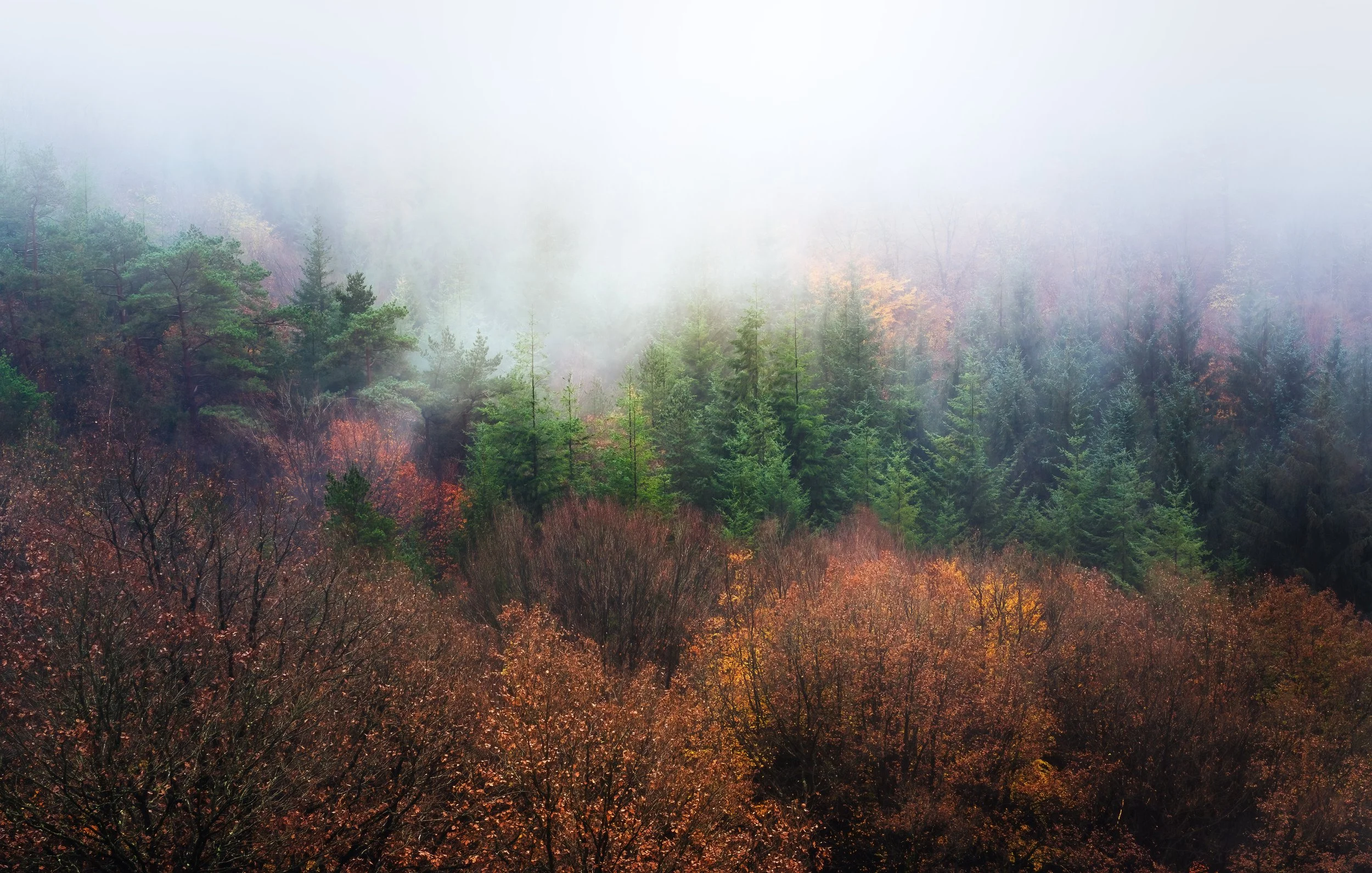
Tip # 2: My favorite thing to do in autumn is go in deciduous forests mixed with evergreens. The contrast between the fresh dark green of pine trees against yellow, gold and dark red deciduous trees makes for powerful images
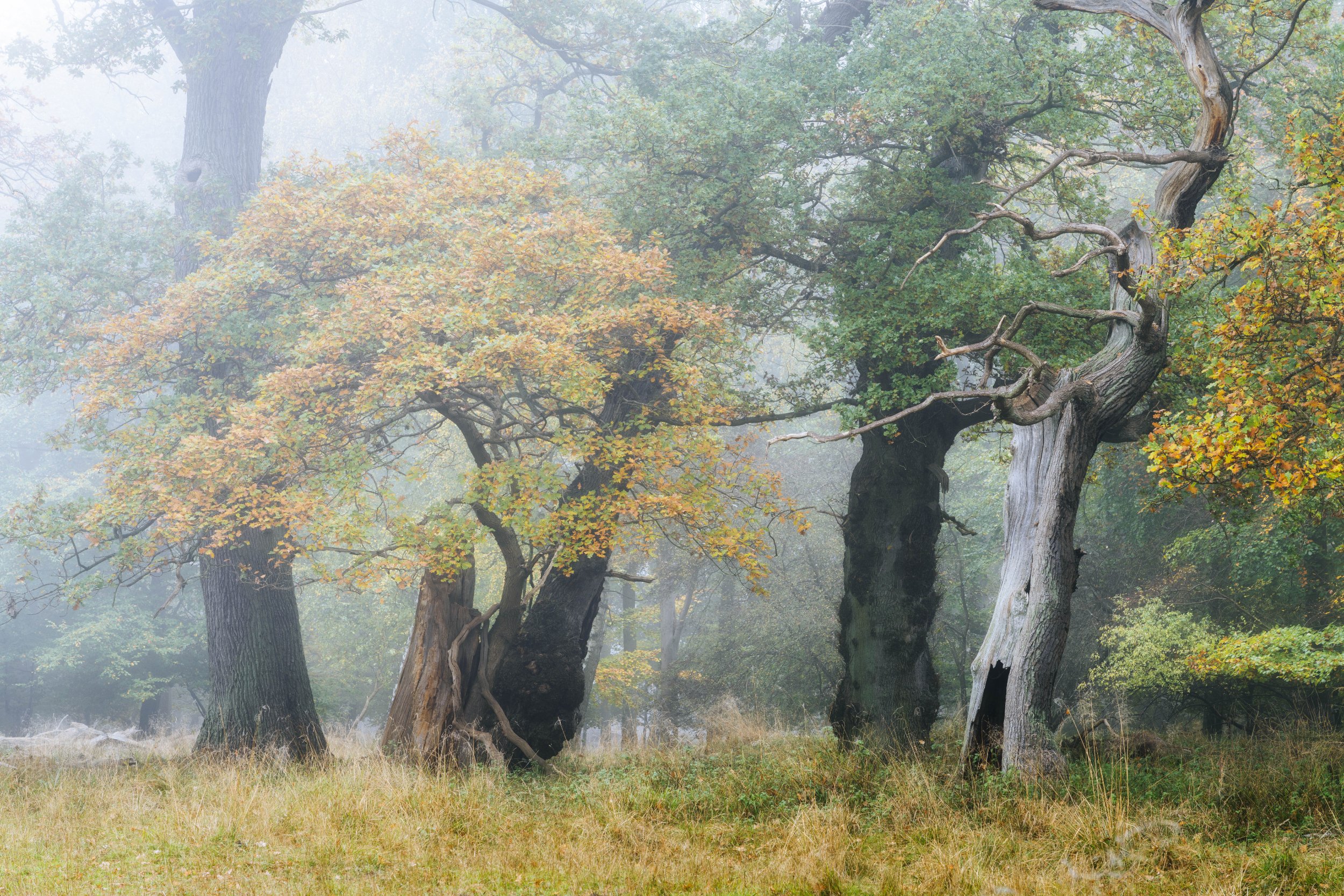
Take advantage of foggy mornings
This one is pretty obvious - but maximizing your time out in those mornings when fog lingers in the atmosphere and the light is golden is the key to adding that extra umph to your autumn images.
Fog is much more common in autumn but nevertheless, try to go out when the chances are high: low wind, high humidity over 95% and dew point equal to the temperature.
I use Windy as the app to predict conditions and try to prioritize the days with the highest chances.
Go out in overcast days or rain
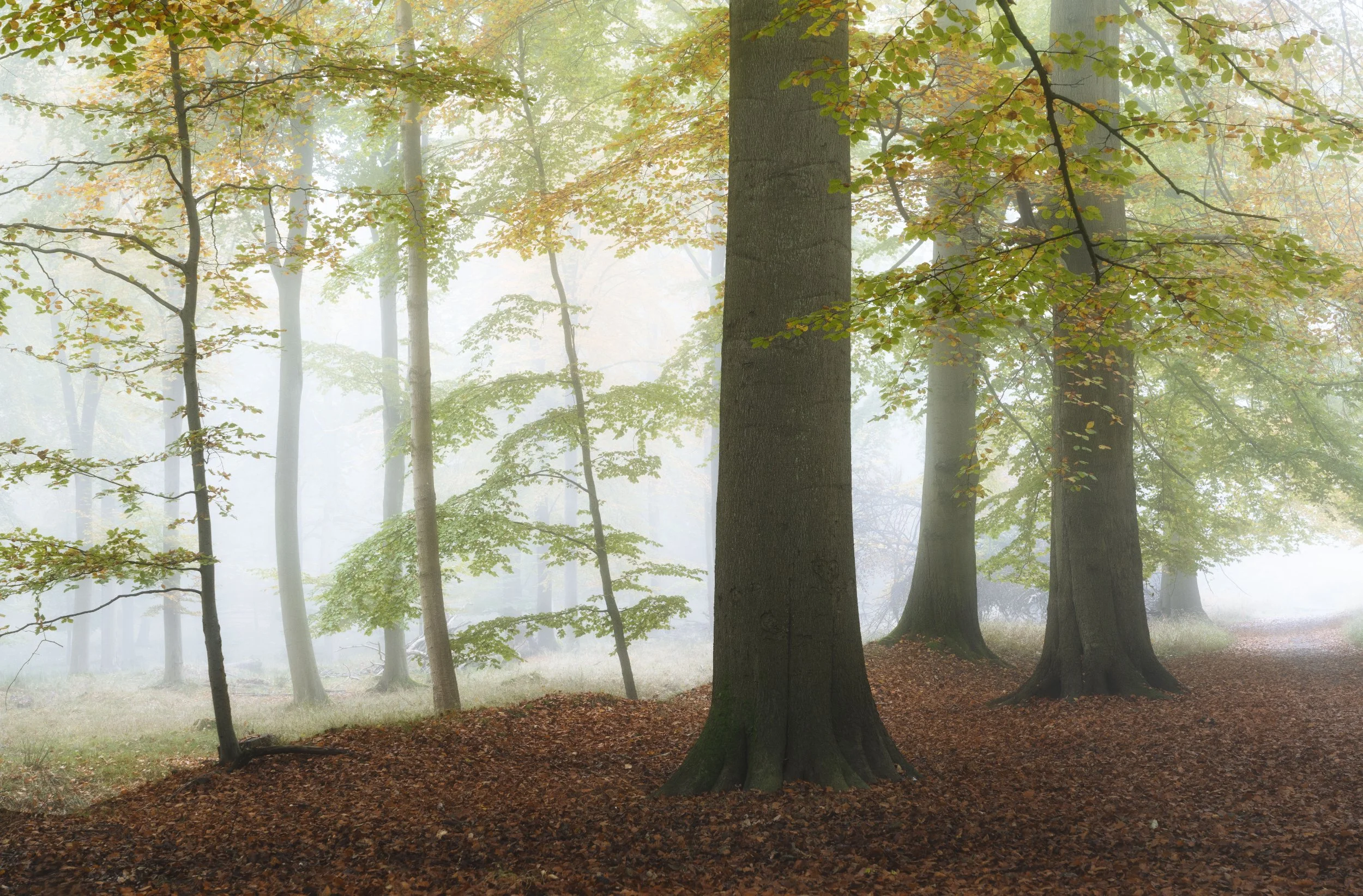
Rain and darker days are becoming more common but luckily, they are great for autumn photography.
The dark mood of clouds and rain dominated by greys and blues complements the warm toned colors of autumn leaves perfectly.
Tip #1: Rain adds saturation to colors so going out in wet conditions will give your images an extra vibrance. Try using a polarizing filter if you get too much glare.
Tip #2: Control your shutter speed. Remember to increase it in windy conditions if you want sharp images.
Simplify your compositions
One of the most challenging aspects of photographing woodlands in general is messiness and clutter. Adding a strong color palette to the mix makes it even trickier to keep images clean and compositions balanced.
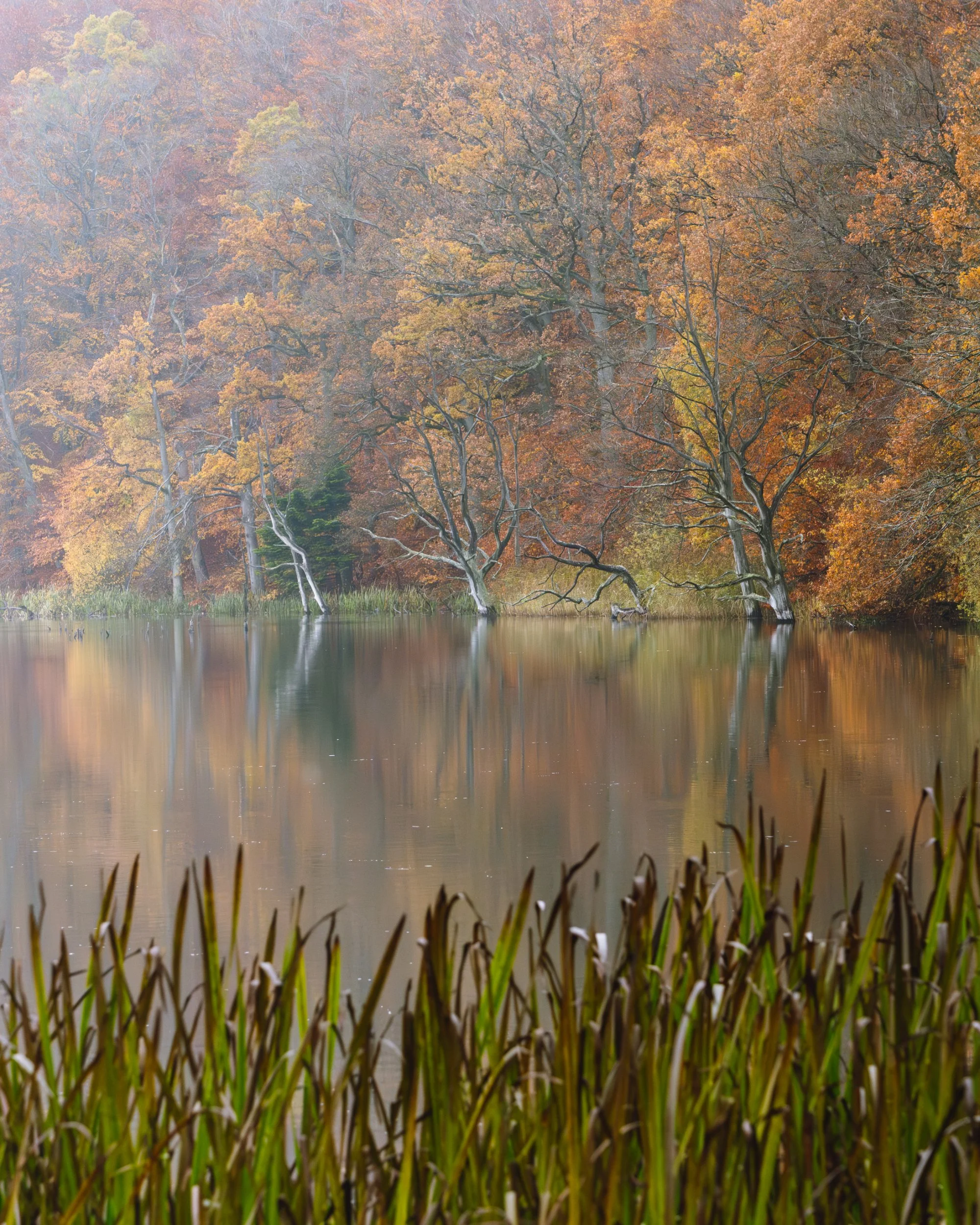
A simple way to ensure you get a better image is to fill the frame - or rather, less is more. By excluding more and only keeping the key elements that you want in the photo, you make room for the image to tell a story.
If you include too much, the image becomes a messy mix of colors, textures and shapes without an anchor for the viewer. It can perhaps be a pretty view to look at rather than a compelling image.
Tip #1: Look for visual hooks. Identify unique subjects (a colorful leaf among a bed of green ones), an interesting tree bark framed by leaves, etc - and make that your subject you build around.
Tip #2: Use longer focal lengths. By excluding the wider landscape you give your image a clear subject and remove distractions.
Create minimalistic aerial perspectives with a drone
Aerial perspectives over forests in autumn provide some amazing opportunities to capture the wide variety of colors without creating visual clutter.
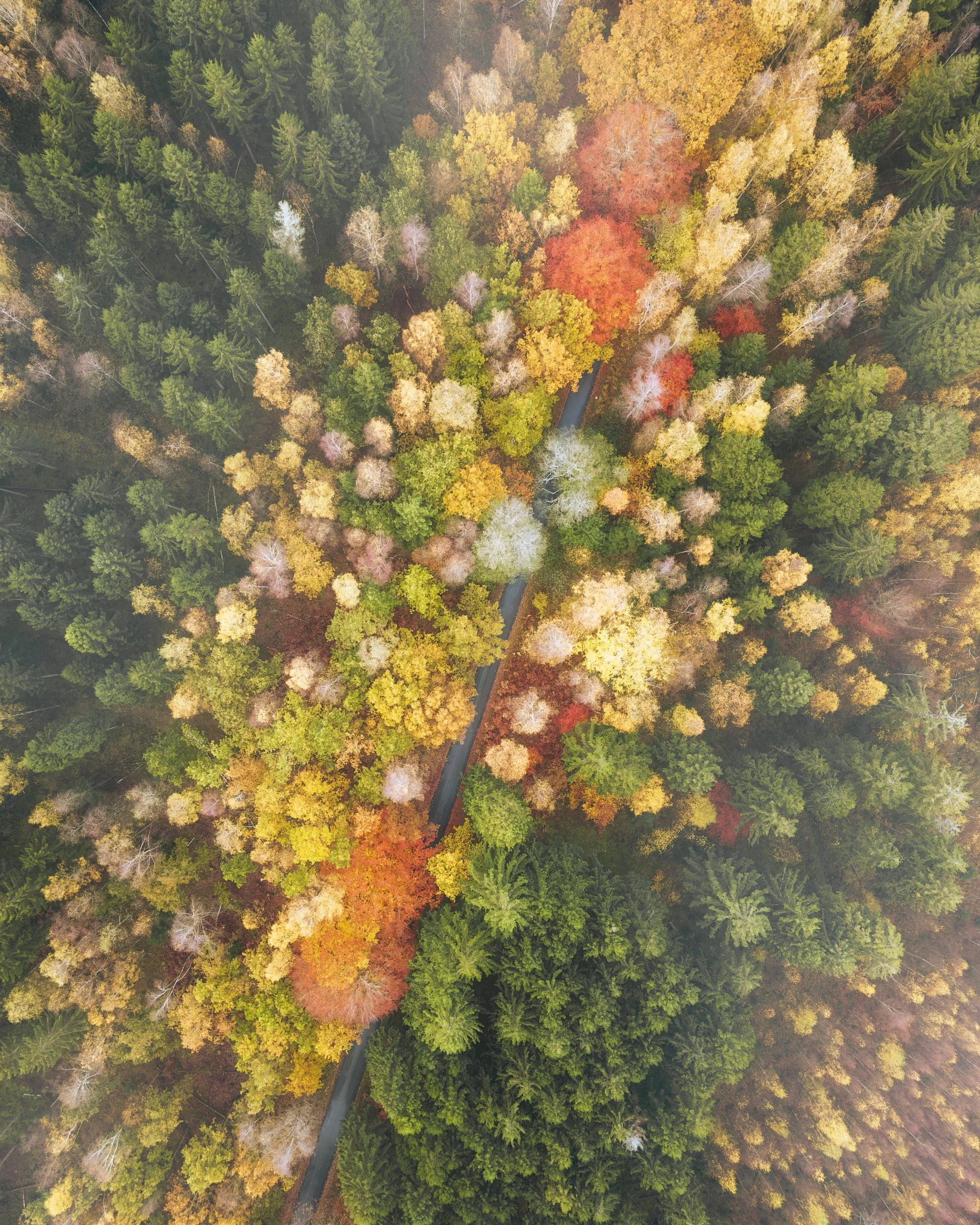
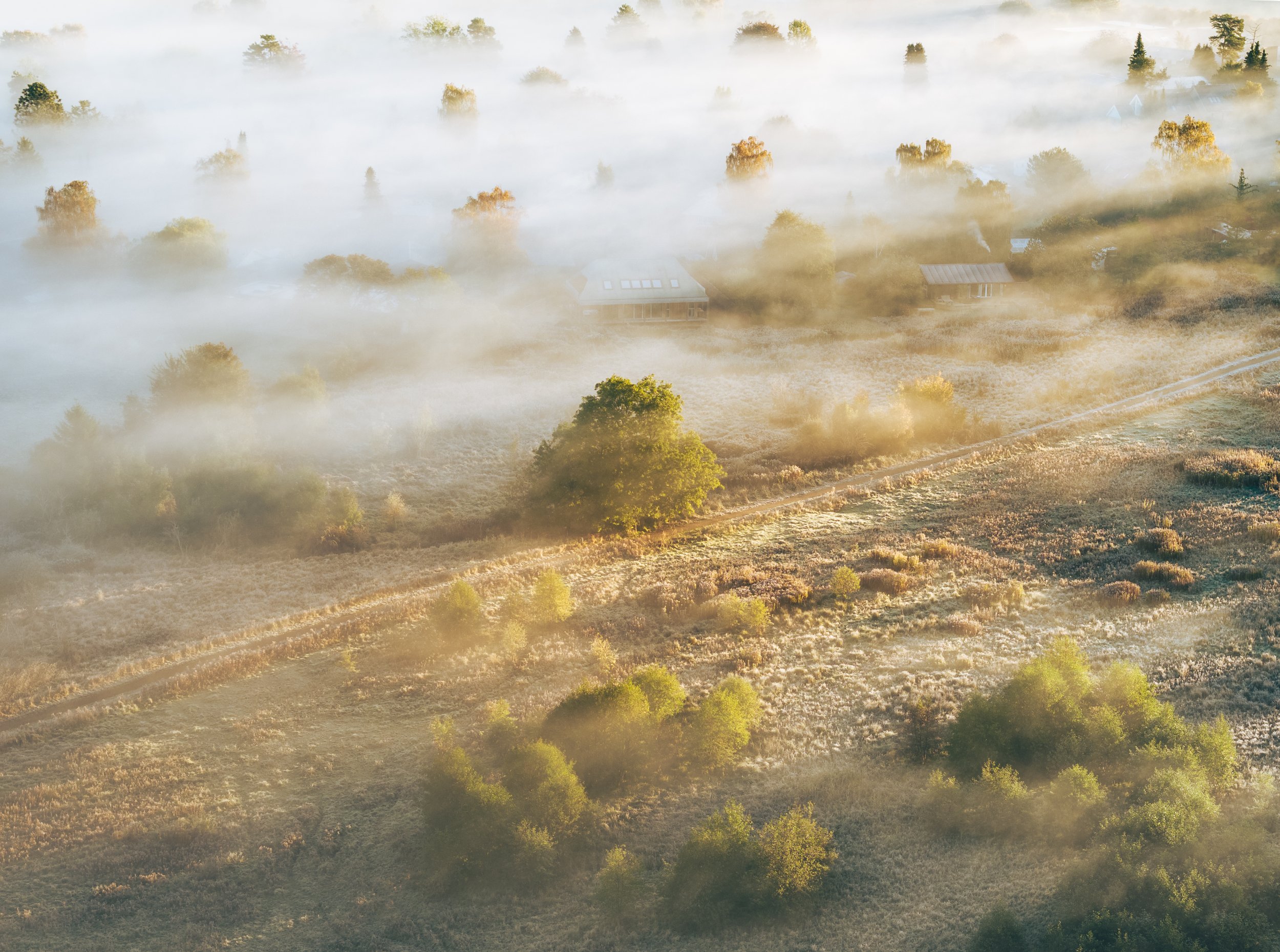
The important part here is to find an anchor. Simply photographing colorful foliage from above might look nice but it doesn’t create a powerful composition that takes the viewer through the frame.
As with any other image, finding a subject is important. Look for patterns, identify a tree that stands out, a house, a lake, road or anything that makes the image more interesting. And of course, good light is essential.
Overcast days are amazing for showing the colorful foliage without having too many harsh shadows over the landscape while morning fog creates separation and layering.
Most importantly, go out there and enjoy this amazing season!
Take care!
Alexandra