Tips for photographing iconic locations in Scotland
Introduction
Scotland has grown to host some of the most iconic hot spots for landscape photographers and nature lovers alike. If you’ve not lived off the grid for the past 10 years you will probably have heard of and seen endless photos of the epic Old Man of Storr, The Quiraing or the Three Sisters of Glencoe.
There is absolutely no doubt why locations such as these are popular and that is because they are indeed stunning, dramatic and very easily recognizable as defining landmarks for Scotland.
Naturally, as a landscape photographer you want to make sure you don’t miss out on your chance to see and photograph these locations; but the issue is of course coming back with something special.
In this blog I want to cover some tips on how to approach iconic locations as a landscape photographer in Scotland and what my approach has been to come back with images I am really proud of.
#1 Research the location from local sources
With popular locations it’s very easy to do a quick search to find information and see countless photos on Instagram of the place. While this is valuable for just getting the basics, it will probably not be enough.
Such locations require a bit more than just scratching the surface. Trying to find local sources and articles written about the location is a great way to get some insider tips. For example, during my research I found the website https://sobt.co.uk/ (Scotland off the beaten path) which contains so many hidden gems but also fresh takes on popular locations.
PS: Use Google translate for articles written in local languages and don’t be afraid to ask locals for recommendations when you are on location.
#2 Plan a sunset, sunrise or even a night visit
The majority of people will visit and take photos in the middle of the day, but if you want to go the extra mile, planning to be there in good light or conditions will help create something special.
I’d really recommend not doing this without having seen the location beforehand because you can risk running around trying to find your spot when conditions are great.
The best approach would be to do an exploratory visit first where you can take your time and return another day for good light. If this isn’t possible, then try to know as much as possible about the location and have a clear idea of where you want to be.
Of course make sure you are aware what time of day the location benefits from the most - certain locations are great for sunrise, others are better for sunset. If you plan an astro shoot, ensure you are familiar with light pollution levels and placement of the night sky versus your subject.
This image came to life during a beautiful sunrise at this location after I had already explored this area a few days prior for 6+ hours. I knew when I first came here that I wanted either a very dramatic sky or preferably a rainbow. I got familiar with the best angles, where the sun rose and how to capture it.
Despite this composition not being unique (it is taken at the classic viewpoint of the Old Man of Storr), the conditions made it special. The fact that I was able to capture this light and the rainbow makes this stand out from the crowd.
#3 Allow yourself a lot more time than you think
Allowing yourself to spend a long time at a popular location has a multitude of benefits and it is honestly my best advice for coming out with something different especially from an over-photographed location.
I spent close to 7 hours at The Old Man of Storr and 6 hours at The Quiraing. I allowed myself a full day to explore the area and had no plans of leaving until I felt there was nothing left to explore. And how did that help my photography?
I wasn’t in a rush, I had time to observe
I was able to experience all sorts of conditions as the weather changed
I explored beyond the beaten path and went in areas no one else was going
I could return to and refine ideas for compositions
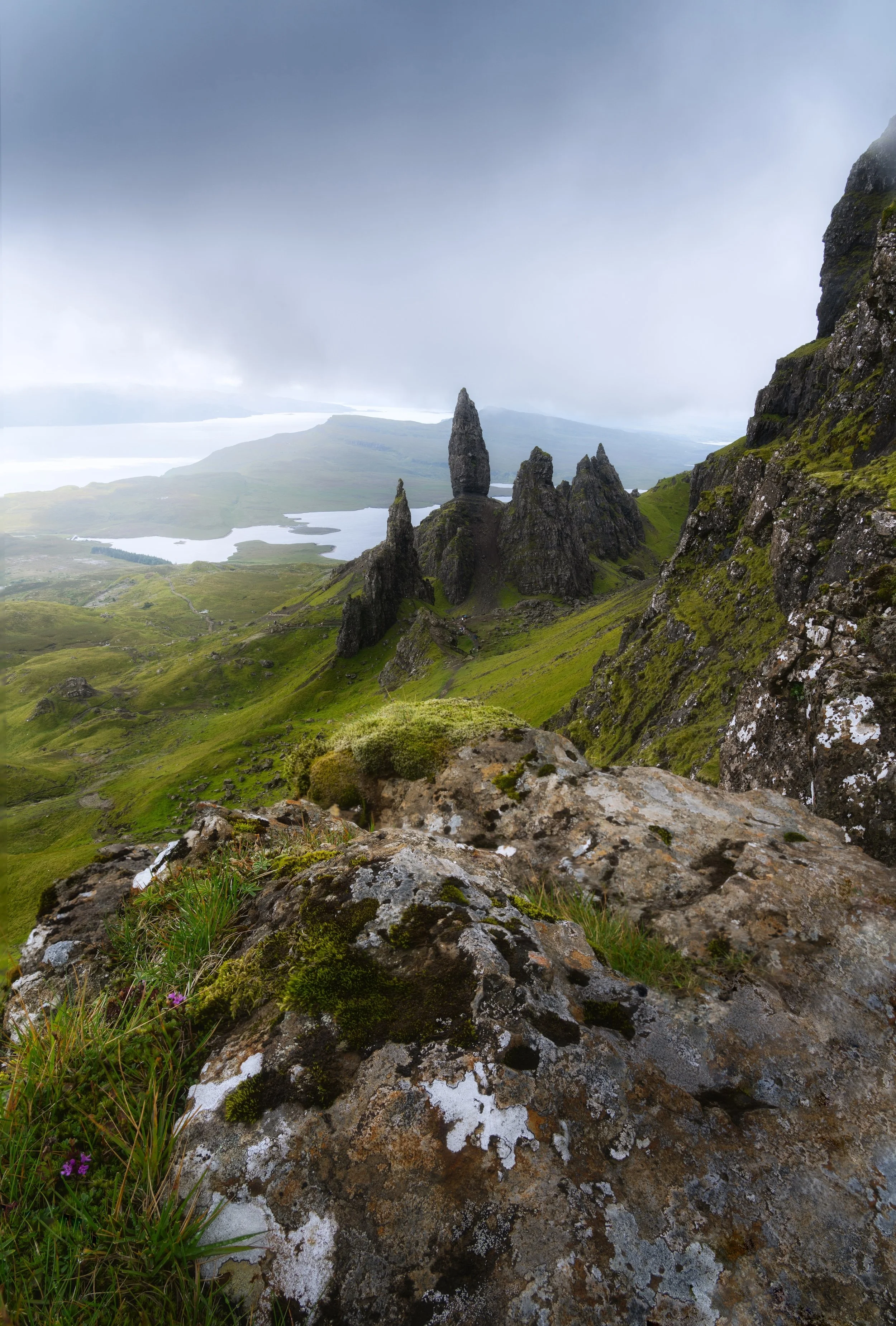


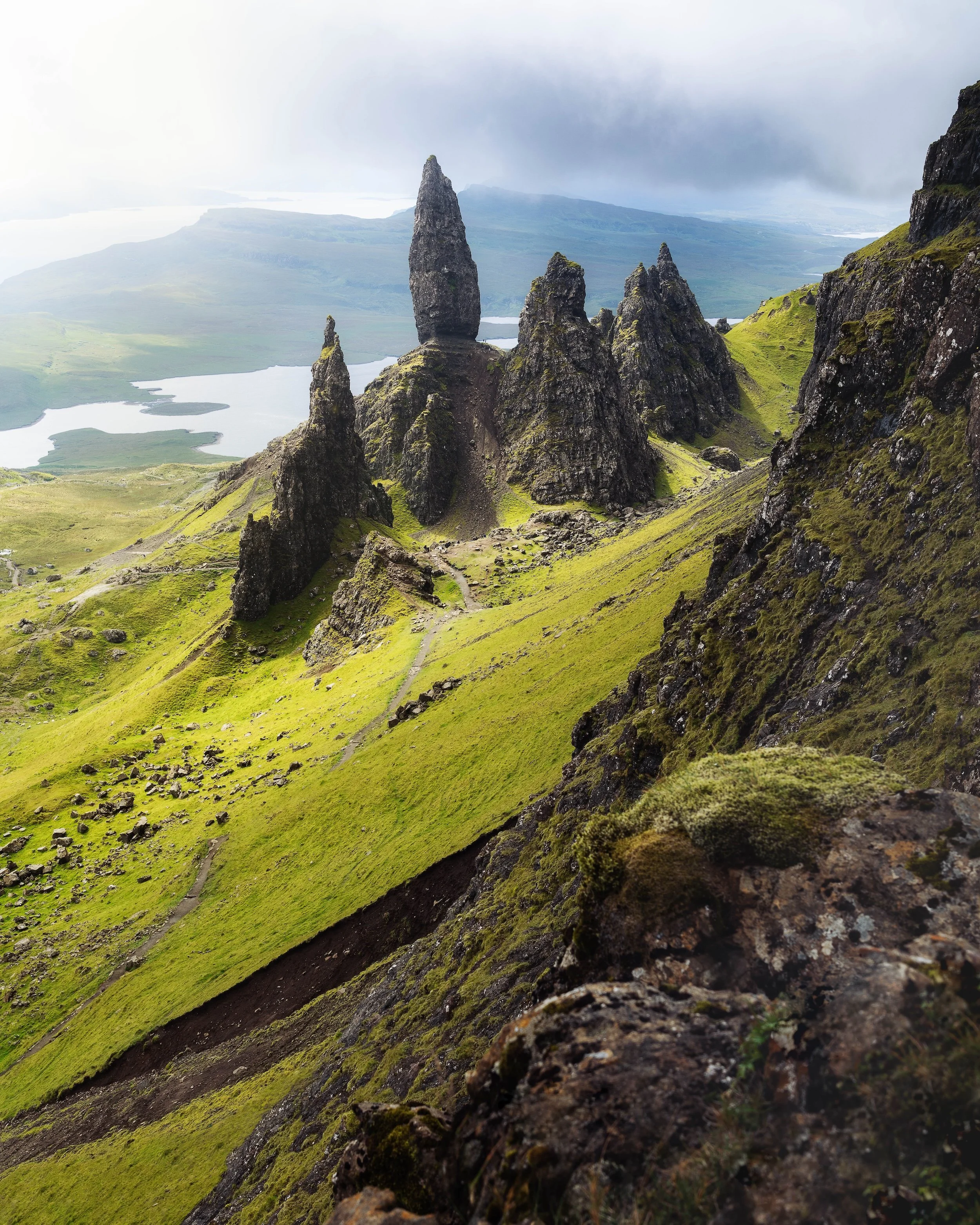
These images are all taken at the Old Man of Storr. They are taken from different angles and unexplored areas. There were thousands of people at this location and yet we were completely alone at some of these places just a few hundred meters away.
#4 Have a concept or vision for your image
This tip is harder to implement as it takes practice but it can significantly elevate your results if done right. The more experienced you get, the easier it becomes.
What I mean here is that you should try to use your imagination to picture what kind of image you would like to create and work backwards from that.
You can achieve that in multiple stages, starting from your research (see what kind of images/moods/concepts inspire you) to getting some ideas in the field when you see and feel the location.
The idea with envisioning the final image is that you will put yourself in the circumstances that will increase your chances of making it come to life. Having a concept makes you work towards something rather than just being reactive to what is happening in front of you.
This approach will not only get you really good images but it will also give you a great deal of satisfaction that you made it happen. Of course there are no guarantees and sometimes your exact vision isn’t possible, but having an intention will always render better results. If you combine this with being adaptive, you are in for success.
The images below were all taken based on ideas and concepts I had beforehand.
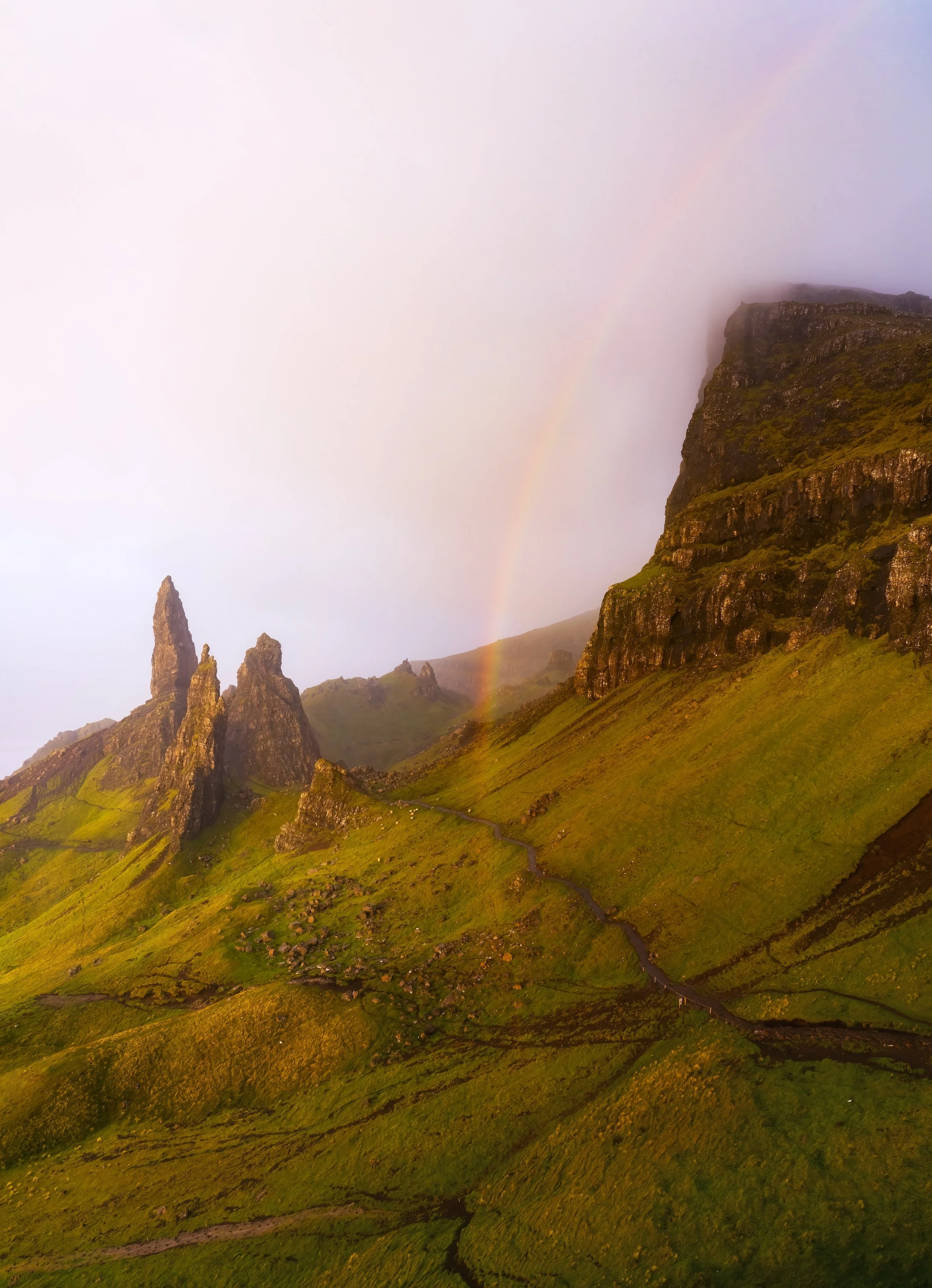
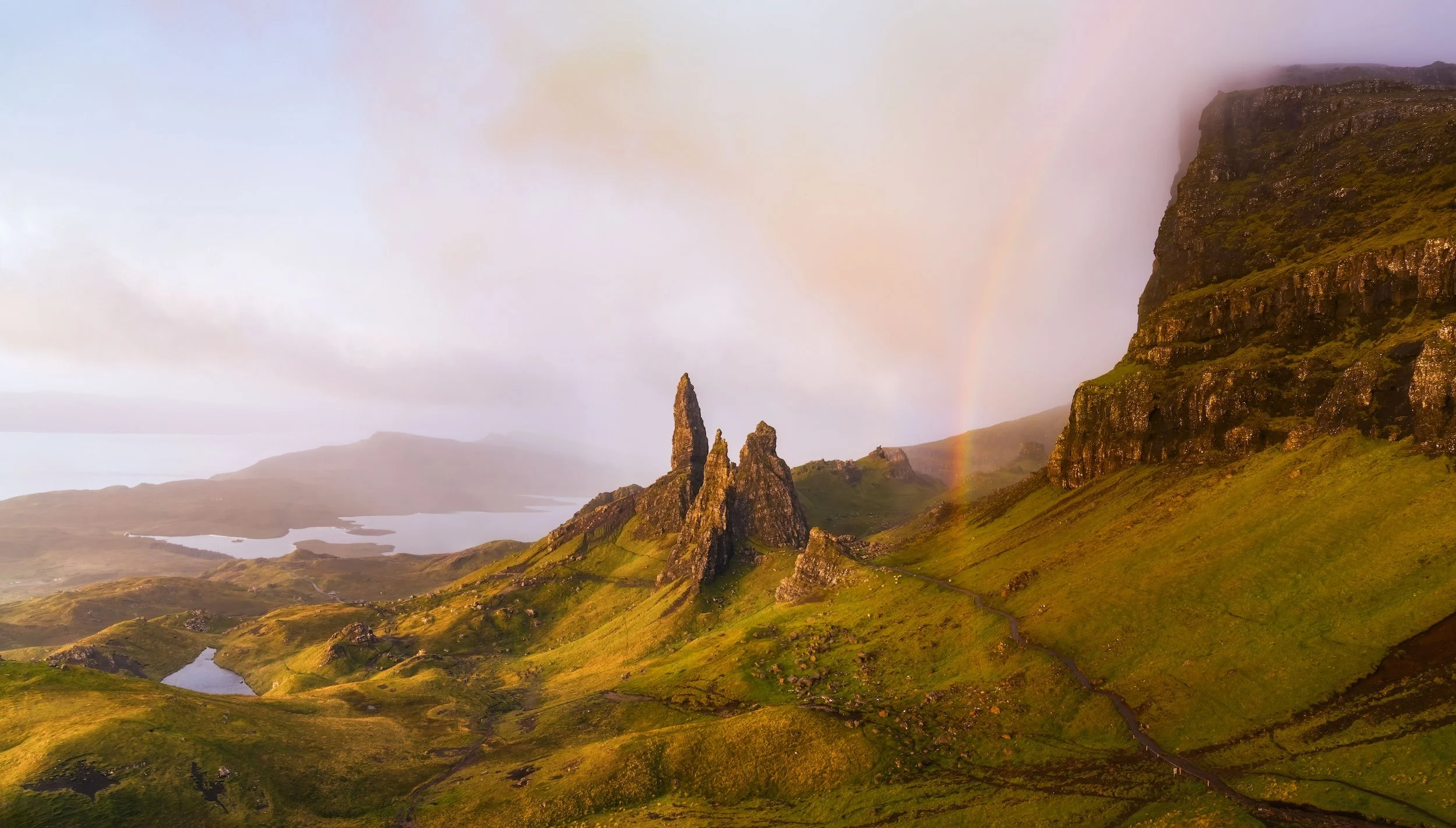
When I first visited The Old Man of Storr and observed how weather and light impacted the landscape so I knew that coming back for sunrise would make a rainbow possible.
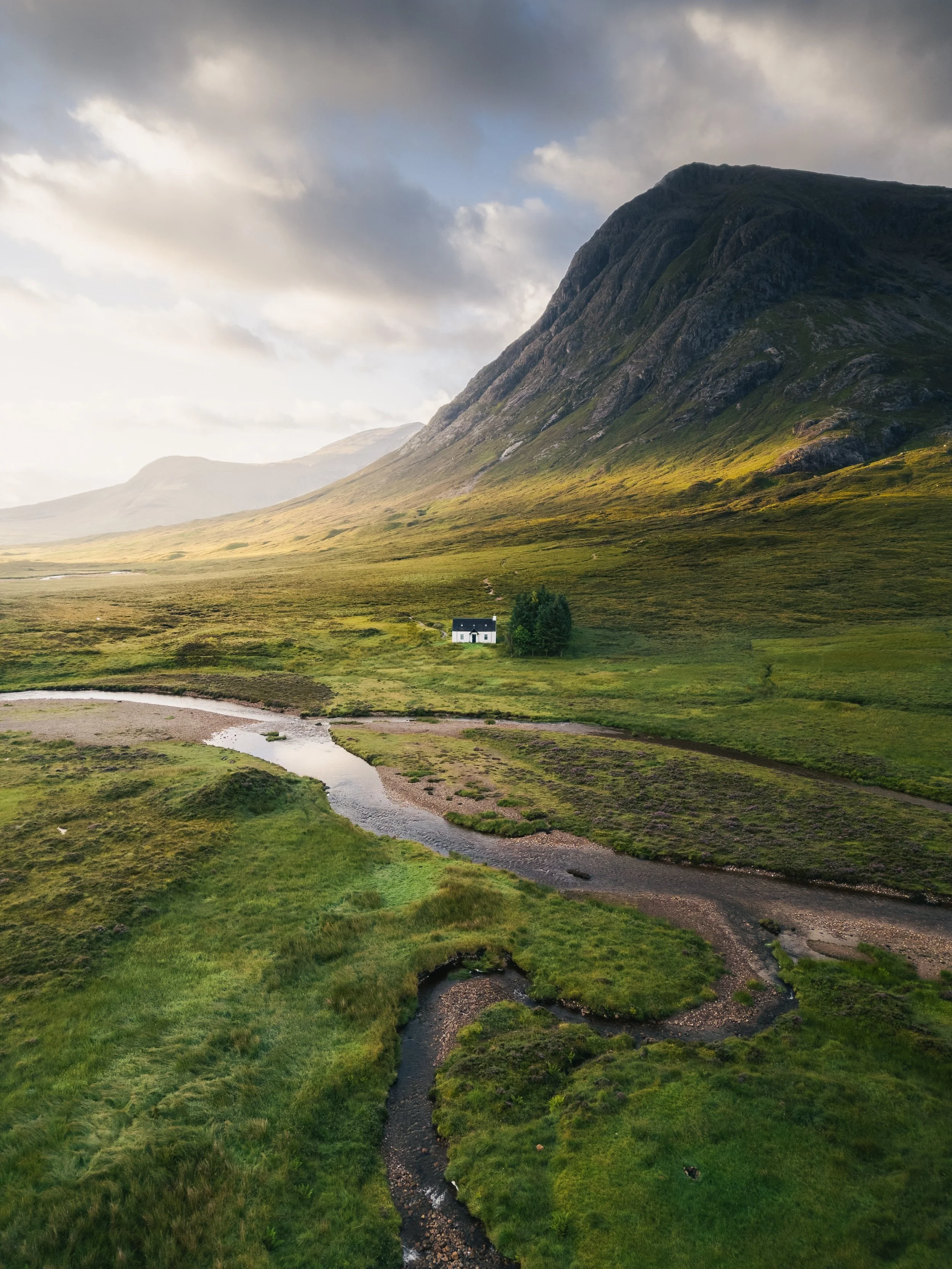

I knew an elevated perspective in Glencoe would showcase the winding rivers and create leading lines which is why I prioritized a day where I could fly the drone there.
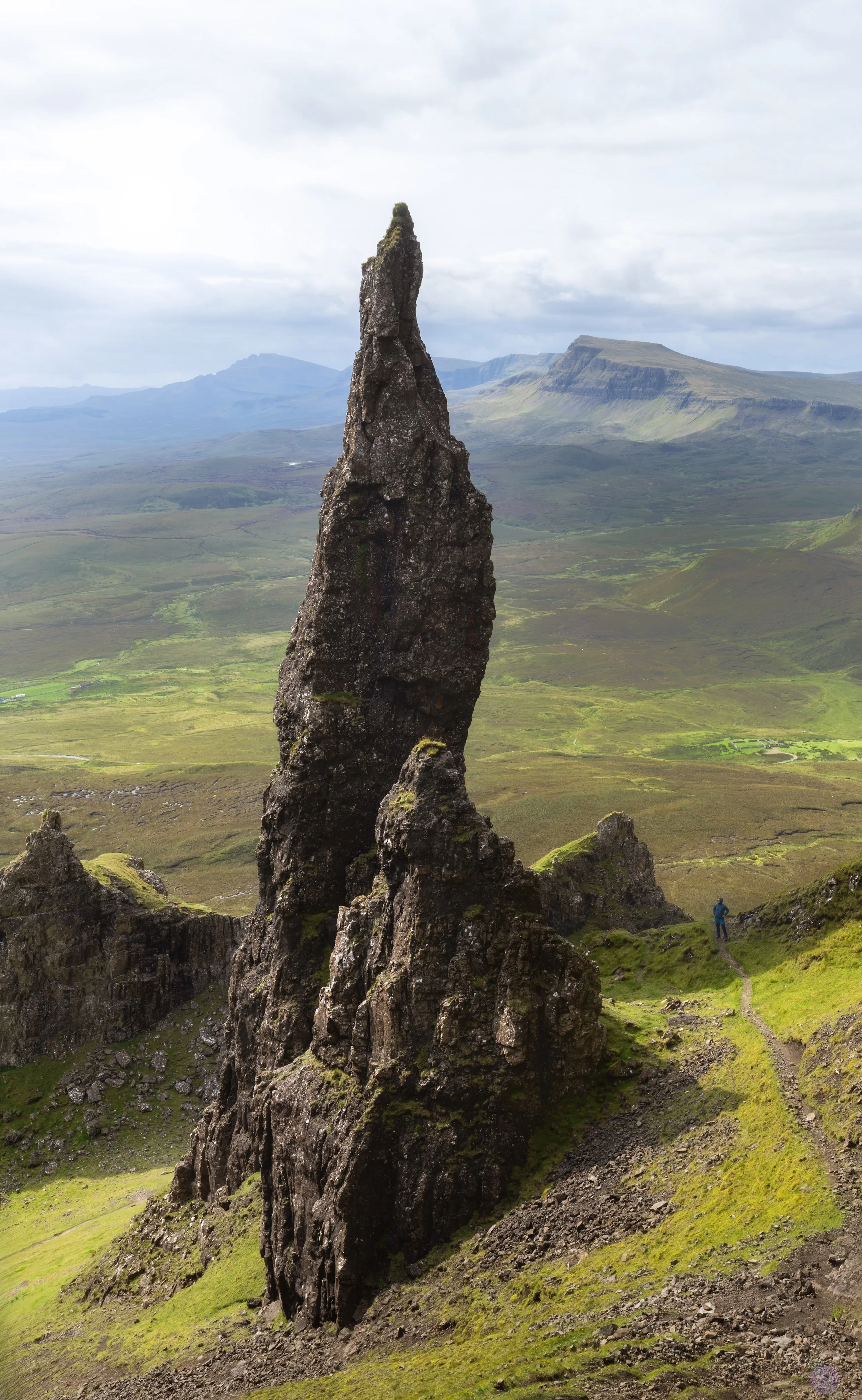
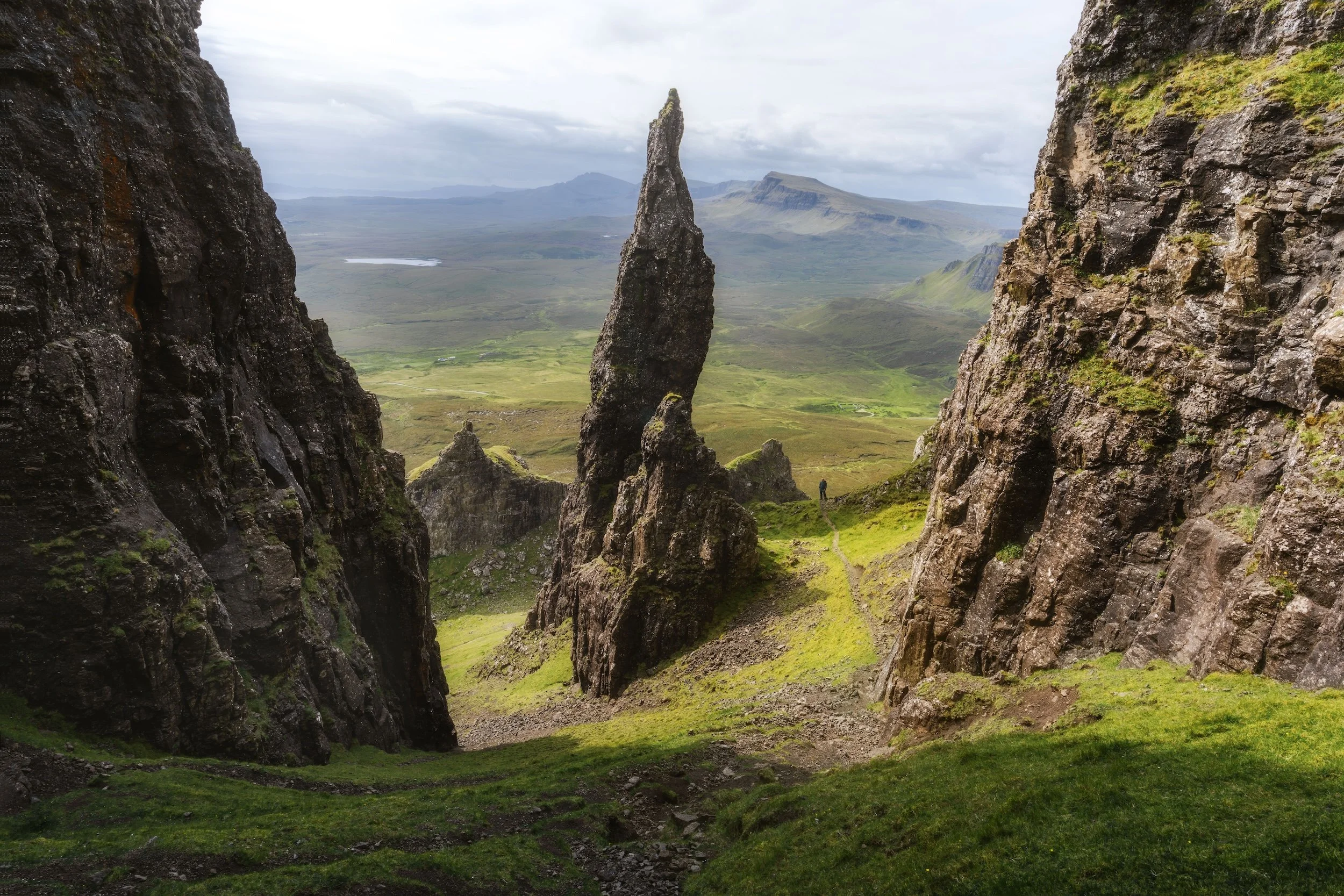
The Needle was a spot I knew I had to use scale for and therefore I used a human subject to portray it. I then waited for a bit of good light to add depth and impact.
#5 Don’t obsess with being original
My last tip is more about the mentality and how I approached things in Scotland when photographing iconic places.
The thing is, over-focusing on originality at these locations can take you down a rocky road. Being entirely original at a popular place is very hard to achieve and here is why I think it can be detrimental.
Firstly, you risk missing out on capturing something special at the obvious spot. If you try too hard to be original you might choose to ignore the main shot altogether but the reality is that it is popular for a reason. And that is because it has (one of the) best views, it is easily recognizable and offers a great composition. But what makes an image special is the story it tells and your unique experience being there, seeing it through your eyes. So completely ignoring that is in my opinion a mistake.
Also, images captured at such places are very easily recognizable so people tend to love and engage with them. People like familiar things and seeing your take on a popular spot will surely be very well received.
At the end of the day it is you who needs to love your work but it sure helps when others relate.

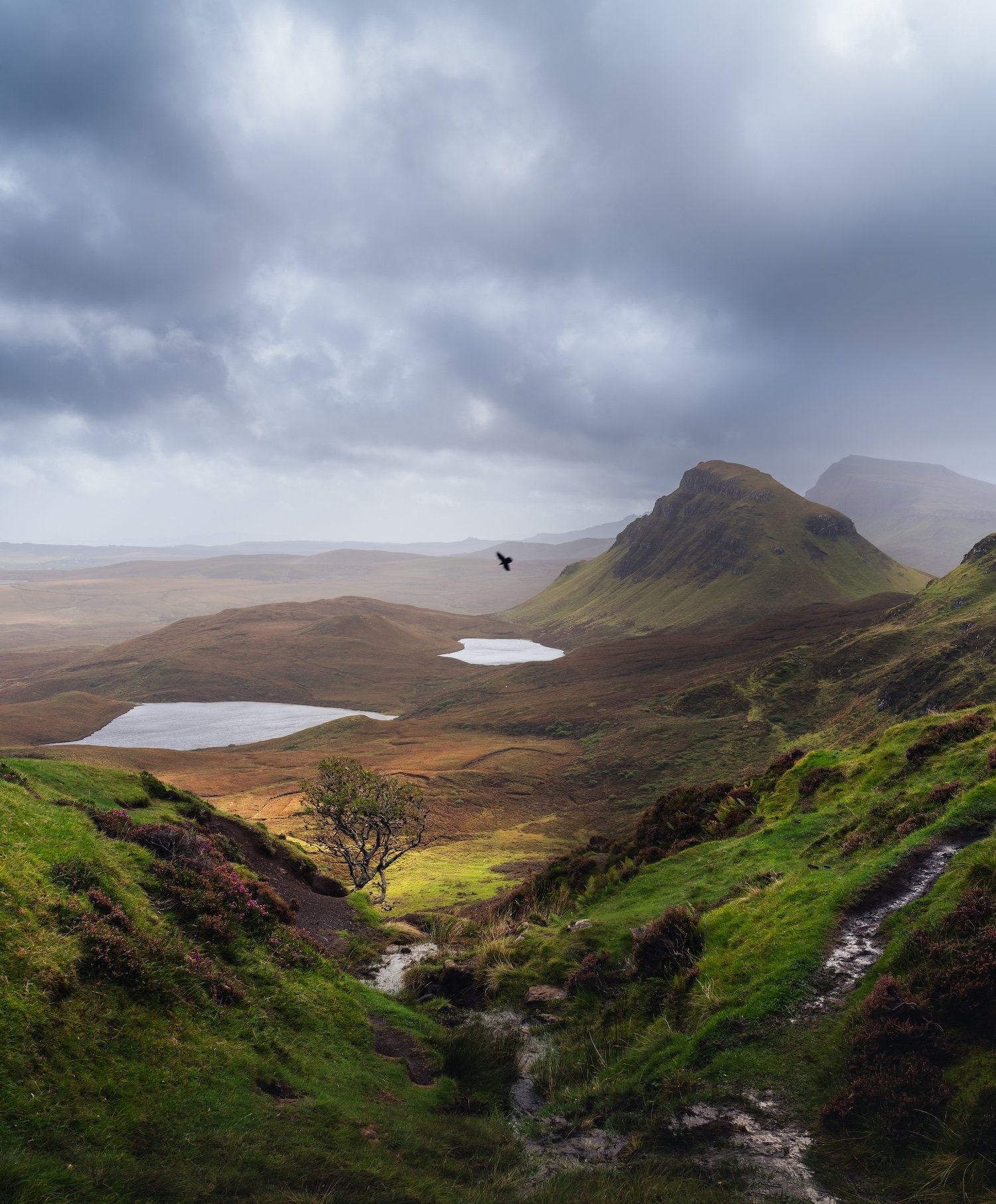

Lastly, people have gone to great lengths at the expense of safety or the environment trying to get something original. While I do support working hard, I don’t endorse being an overachiever at any cost. I believe you can find originality and uniqueness in many different ways but being overly focused on it can push some people towards making poor decisions.
Taking a balanced approach when it comes to the obvious composition at such places is in my opinion the best way to go. Have a curious and exploratory eye to such places and look for smaller details and different angles.
Try focusing on uniqueness instead. Observe things that other people miss and it will lead you to capturing special moments in very recognizable places.
#6 BONUS TIP: Play around with focal lengths and foregrounds
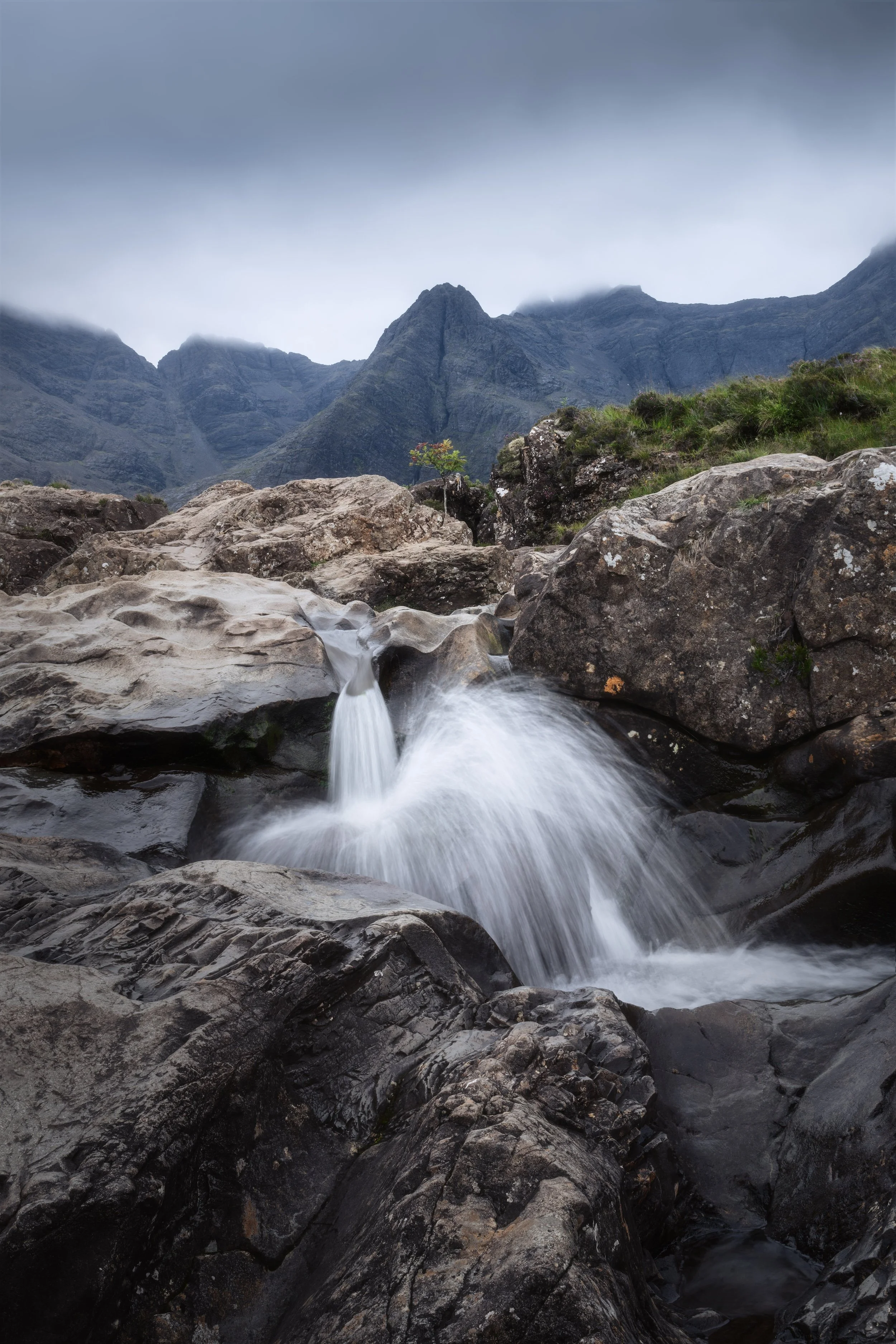
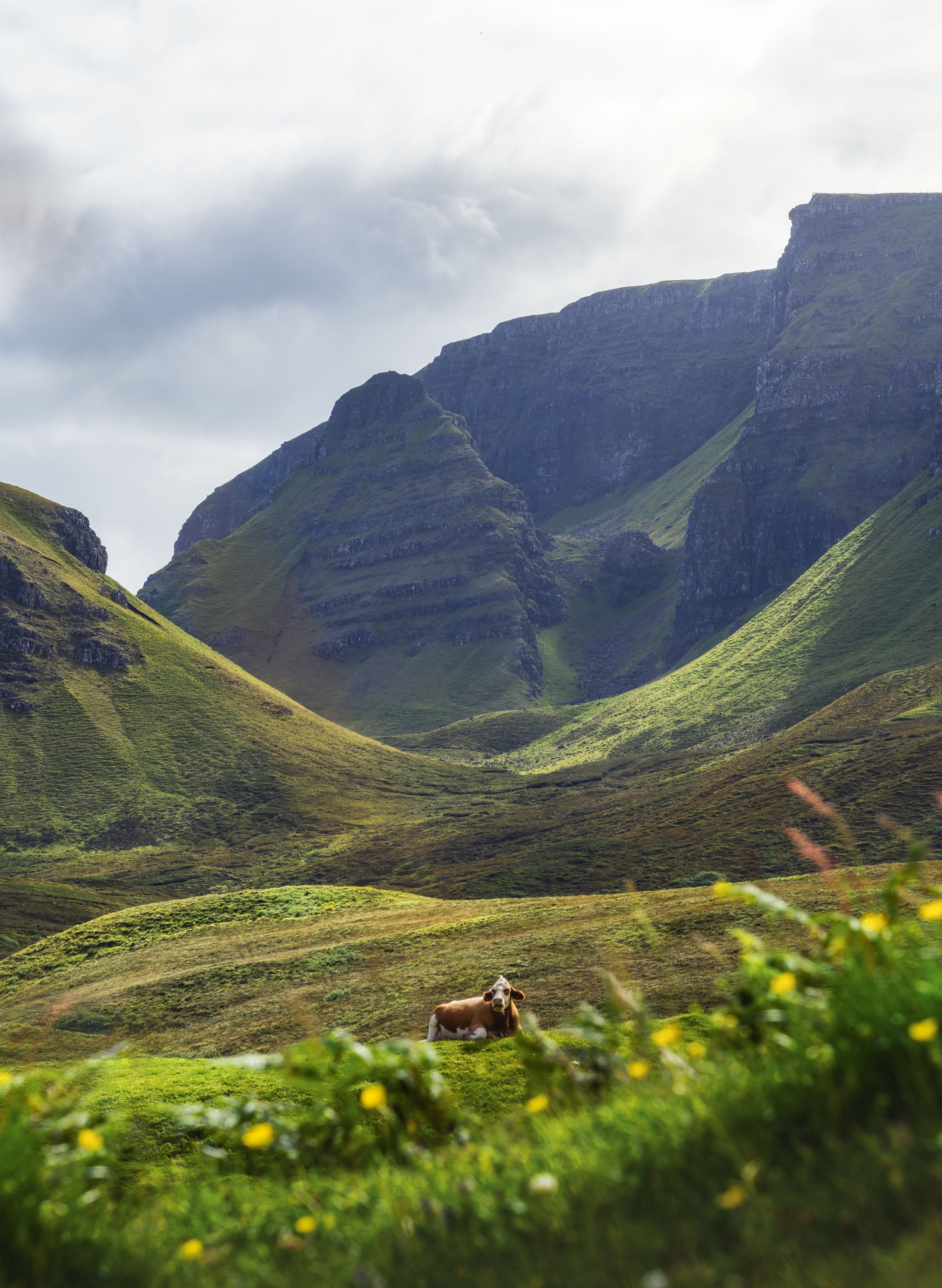
The easiest way to showcase a popular location in a unique way is to portray it through a different perspective. And the easiest way to do that is to use all the tools in your toolbox to play with that perspective.
I like to test out all sorts of focal lengths at these locations even if they typically suit a specific one. Sometimes it works, sometimes it doesn’t. But I always try. Scotland has such a rich and diverse nature that foregrounds are never lacking, so the key is to observe.
Additionally, finding interesting foregrounds will always elevate your photography. And you’ll be surprised at how many interesting things you can find if you go behind a rock or go down low on ground level. It’s all about observing interesting angles and patterns, finding leading lines or structures.
I hope these tips will help you in your photography at popular locations in Scotland but also anywhere else in the world.
This is my approach to them and how I find the most joy and get the best results at such locations.
The biggest element in my opinion in succeeding is time and timing. Give these two aspects enough attention and you will surely get something extraordinary.
Have any questions for me? Comment below.
With love,
Alexandra