7 important planning lessons I learned in Scotland
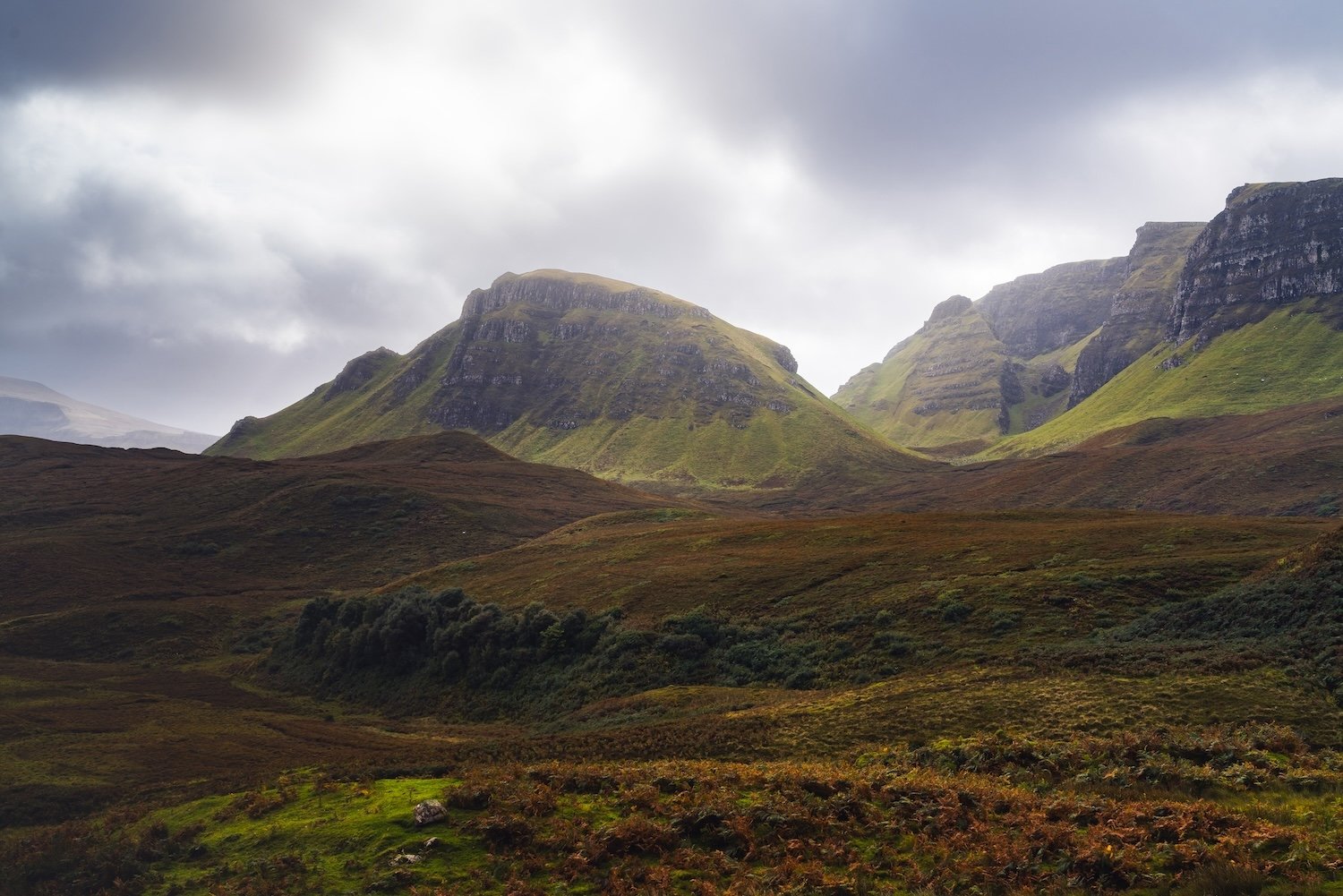
My recent trip to Scotland has been such an exhilarating experience but also difficult and overwhelming. It taught me a few lessons about traveling to a new location and planning photography spots, which I thought I would share in this blog. These learnings are not only good for photo lovers but for any travels to nature-oriented places where there is a bit of adventure, road tripping and hiking involved.
Prioritize your locations
It’s very easy to get carried away when sitting in front of a computer researching new places to start making a very long list of everything you’d like to see. In most cases, only a fraction of that is doable if you want to get something out of the experience.
If you put too many locations on the list without a proper order or prioritization, you can end up running around like a headless chicken trying to make it to all of them without even enjoying the process or getting any good photography out of it. I learned that the hard way with having too many locations planned without a proper system to prioritize them.
My suggestion would be to use Google My Maps to start your own map with pins for the places you want to see. This map allows you to not only add pins, but to color code them, add comments and links to articles and assign icons depending on what type of location it is (mountain, castle, hiking area, photo spot, etc).
The point here is to mark your locations in such a way that you have a clear visual overview but also a way to distinguish between them on the go, making it easy for you to use this map when you’re traveling.
Tip: I also like to add comments (information about the location, what time of day is best to visit, how long it takes to get there, etc). You can also share the map with others and collaborate on pins. The map opens in Google Maps as well so it is easy to use for directions, too.
Extra tip: If it isn’t obvious, make a pin for where the car park is for a certain location. Often times the car park is in a completely different place than the actual spot and you end up wasting time on the day trying to find it.
2. Do thorough research on key locations
This goes hand in hand with tip nb. 1 but comes as a very important addition. Identify those locations that are an absolute must-see for you, and spend proper time researching how you want your visit to go.
This involves a few things:
Reading multiple articles from different sources about it
Researching images on Google, Instagram, etc to get an idea of the place
Consulting with Google Earth to see the topography and identify good viewpoints
Establishing where the sun rises and sets for your travel dates so you can decide when to visit
Evaluating how much time you will need
Giving yourself wiggle room for coming back to the location more than once (if possible), in case of better conditions.
Most important - writing a summary of all this in your Map where the pin is so you can easily access it on the go
This is probably the tactic that will get you the best results and enjoyment out of an amazing location alongside tip nb. 4 below.
3. Place your accommodation strategically
I cannot stress enough how important this is. A strategically placed accommodation that has an optimal travel time to your most important spots will, above all, save you a ton of time. It will also enable you to be much more flexible with how you approach your locations on the day.
My best tip here is to not decide on your accommodation until you have made a map with pins of places you want to see. Once you have that, you can see where the “hot spots” are of places which are close to each other, so you can decide where to look for your stay. This will also help you decide for how long you should stay in one place.
To note: You might also need to evaluate based on your individual plans and how important certain spots are for you. If you want to “nail” a must-see location that has no other pins around, you might decide to place yourself close to it, even if it means longer travel times to other less critical locations. It is up to you to evaluate the priorities.
You can choose to move around from place to place, but be careful with that approach. Moving around a lot is much more tiring than you think, takes a lot of time and leaves very little room for returning to a location. If you do stay in different places, make sure you give yourself enough time at each of them.
4. Allow more time than you think
If there’s a lesson from this entire article you should take with you, it’s definitely this one. Things take much longer than you think. Of course, you can speed through a place in no time if you want, but you will have missed the whole point. On the photography side, you will probably come back with some average shots that every tourist has taken before.
Make sure you research your locations properly and try to estimate how long you might need. Then double it... At least. You will thank yourself for allowing the necessary time to not only enjoy the place but also come back with some special photos from unique angles, or perhaps in epic conditions that don’t just happen in the blink of an eye.
Give yourself the space to explore, go off the beaten path, sit on a rock and enjoy your snack while you admire the beauty in front of you. It will make your whole experience so much better and will yield so much better results photographically.
“What if I’m done early?” you might ask…Although it is quite unlikely that this happens, it can. It can also be that the conditions do not allow you to spend the time you planned for a location. That’s when your map comes in handy so you can be adaptable on the day.
Tip: Take into account travel times and “dead-times” properly
That means doing proper estimates of how long it takes you to get from one place to another but also to allow yourself time to take a break, get lunch, fill up the tank, etc.
If you want to be efficient you can of course pack food and water for the road which is always a good idea. But you allow time to cover your basic needs.
Remember: You won’t be able to enjoy a hike, take good photos or brave the elements if you’re in any physical distress or if your basic needs are not met.
5. Manage your physical effort
This can be a tricky one, so I will share my learnings that work for me and my body, my fitness level and the way I work, which will hopefully be useful.
Managing your physical effort is necessary to be able to get the most out of a place and make you enjoy it as much as possible. It involves:
Having the proper clothes for the weather but not overdressing
Proper footwear is critical
Managing the load you carry in your backpack
Having just the right amount of snacks and water
Not rushing to reach your destination
The one thing I want to emphasize here is the load you carry. It can become very difficult to hike with a heavy backpack making you not able to enjoy your hike or go off the beaten path to take good photos. Try to prioritize the gear you need for a certain location so you only carry what you will make use of. This is valid also for any other items in your backpack that carry weight.
What I usually do to limit my weight, depending on the location:
I leave one lens behind which I think I will need the least. That is usually my wide angle lens because I can do vertical panoramas with my longer lens
I leave my tripod behind when I can. This is mostly possible on mountain hikes in broad daylight with no bodies of water around.
I drop any clothes or accessories which aren’t needed for the weather. I also try to layer clothes which are light and airy so I recommend investing in such clothes for hiking
I try to take a small snack and water, but not more than I need
This is all about balance. Make sure you have everything you need with you in terms of gear, supplies and clothes but don’t take more than you need if it limits you.
6. Have backup plans
Making backup plans is something that I would recommend doing in the evening before when you’re planning your upcoming day. There are so many variables to take into account, the most important one being the weather.
Depending where you are, weather can vary quite a lot and forecasts can be unreliable so it’s always good to have a plan B, maybe even C. Use your custom map to plan out your backup locations and times needed for them in case you need it.
Make a note in your phone with your backup plans if it’s easier to keep track this way. Make sure your backup plans are doable for the day and always check the weather before going somewhere.
7. Be prepared to change plans
Last but not least, adaptability is key. No matter how much you plan, things can go differently than what you expected. But nevertheless, having the right tools with you to help you when you’re already on your adventure makes a world of a difference and it will allow you to make the best out of the conditions you get.
My best tip here is to not cling on to your plans too tightly if the situation clearly indicates you should change tactics. For me, this was a valuable lesson in Scotland and it didn’t come without disappointment as I was quite set on nailing a few key locations. But the important thing is to just accept the situation as it is and make the most out of it within reason.
Conclusion
Hopefully these tips will help you in your future adventures to plan and be prepared for exploring the unknown. To me, being properly prepared and having done the research is what makes new locations a bit less overwhelming and more manageable. I have definitely gotten much better over the years but I believe these lessons are definitely crucial to making that experience even better.
I hope you find this useful and let me know in the comments if you have other tips that you’ve gathered along the years in your adventures abroad, I’d love to know.
Happy exploring!
Love,
Alexandra